Why Solar Panels in Bedford Make Sense Today
Rising energy prices and a growing focus on sustainability have made solar panels one of the most practical upgrades for Bedford households and businesses. Sitting in the heart of Bedfordshire, the area enjoys solid solar potential thanks to its relatively open skies and optimal roof orientations across many properties. A typical 4–5 kWp system on a south or southwest-facing roof in this region can generate roughly 3,300–4,200 kWh per year, enough to offset a large share of daytime electricity use. When paired with battery storage, the proportion of on-site consumption climbs further, turning daytime sunshine into reliable evening power and smoothing out seasonal variation.
In the UK, the Smart Export Guarantee (SEG) allows owners to earn for each unit of excess power sent back to the grid. Tariffs vary by supplier, but even modest export rates shorten payback times and improve the total return on investment. There’s also welcome help on the tax front: qualifying domestic solar and certain battery installations currently benefit from 0% VAT, making it a timely moment to act. For most homes in Bedford, planning permission for roof-mounted PV isn’t required under permitted development rights, provided installations meet height and appearance rules. Exceptions do apply—particularly for listed buildings or properties in conservation areas—so it’s sensible to confirm any site-specific constraints with Bedford Borough Council before work begins.
For local businesses, the case is equally strong. Retail units, offices, warehouses and schools in Bedford can trim operational costs by using on-site solar to meet daytime demand, ease peak loads and reduce exposure to volatile tariffs. Large, unobstructed roof spaces common in light industrial estates are ideal for scalable PV arrays, while export limiting and advanced monitoring keep systems compliant with grid requirements. Clean, on-site generation also supports corporate sustainability targets, providing visible carbon reductions and a compelling message to staff, customers and stakeholders. For professional guidance on Solar Panels in Bedford, homeowners and businesses can draw on local expertise to design systems that align with building type, usage profile and budget.
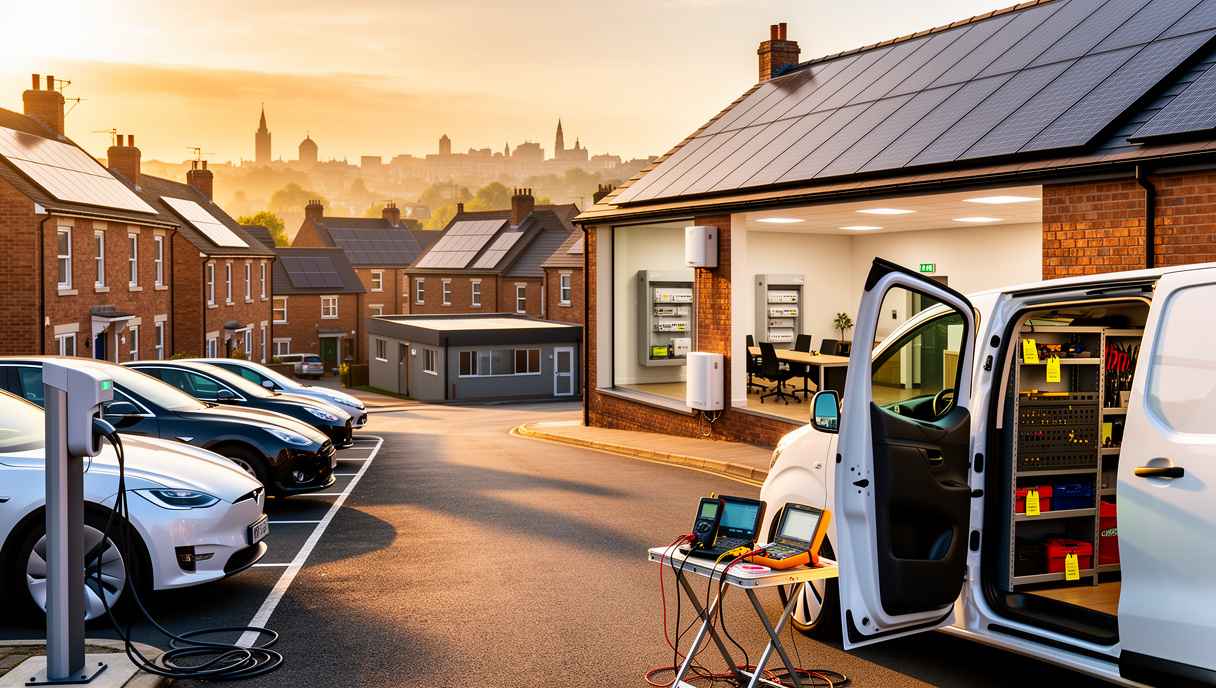
From Survey to Switch-On: What a Quality Bedford Solar Installation Involves
A successful solar project starts with a thorough on-site survey. Installers assess roof condition, structure and materials—tile, slate and metal roofs each call for the right fixings—plus orientation, pitch and shading from chimneys, trees or neighbouring buildings. In Bedford’s varied housing stock, shade analysis is crucial; power optimisers or microinverters may be specified where partial shading would otherwise impact output. The survey phase also reviews electrical infrastructure, from the consumer unit and RCD protection to the available spare capacity, ensuring integration meets current standards (including BS 7671 and PV-specific requirements in Section 712).
System design balances production, budget and lifestyle. South-facing arrays maximise yield, yet southeast and southwest roofs often achieve excellent returns with a smoother generation curve across the day. A hybrid inverter can manage both the PV array and battery storage, letting homeowners store surplus energy for evenings or power through short grid outages if configured with an emergency power supply. Battery sizing is tailored to usage; a smaller unit might support nightly cooking and lighting loads, while larger capacities serve EV charging, home offices or heat pump schedules. Installers also discuss export limiting if required by the Distribution Network Operator (DNO) to keep grid impact within approved thresholds.
Before installation, DNO notifications or approvals are handled under G98 (up to 16 A per phase, typically about 3.68 kW on single-phase supplies) or G99 (for higher capacities or three-phase systems). The build itself involves scaffolding, roof anchors, rails, weather-tight flashing, tidy DC cable routing and safe AC connection at the consumer unit, often with surge protection devices if recommended by risk assessment. On commissioning day, electrical tests verify continuity, insulation resistance and polarity; inverter settings are configured to the correct grid code; and monitoring apps are activated so owners can track performance in real time.
A comprehensive handover pack should include user guidance, warranty information, schematic drawings and key safety details—particularly the location of isolators. Over the long term, routine checks, periodic electrical inspection and occasional cleaning (where access and roof angle warrant it) help maintain output, while firmware updates and performance reviews keep the system running efficiently. The result is a neat, compliant, well-documented solar installation that delivers dependable savings and supports a cleaner energy footprint.
Real-World Bedfordshire Scenarios: Homes, Shops and Warehouses Getting More from Solar
Solar is rarely one-size-fits-all. Bedford’s property mix—Victorian terraces, 20th-century semis, new-build estates, and commercial sites—benefits from tailored designs that turn local conditions into real results. Consider a semi-detached home in Kempston with a 4.8 kWp array facing southwest and a 7 kWh battery. Daytime production handles base loads like refrigeration, routers and standby devices; smart timers shift dishwashing and laundry into sunny hours; the battery covers evening peaks. Over a year, self-consumption might reach 60–75% with careful scheduling, delivering bill reductions even through shorter winter days. Pairing the system with EV chargers and a time-of-use tariff can further cut costs—charging from mid-day solar, then topping up overnight during off-peak rates.
In Bedford town centre, a café or convenience store with refrigeration and coffee machines sees immediate benefit from a roof-mounted 10–20 kWp array. Daytime production meets much of the base demand, especially in summer when cooling loads rise, and SEG payments monetise quiet periods. Add battery storage and the business can shave early-evening peaks, reduce grid imports during expensive slots, and ride through brief power interruptions for critical circuits. With flat or gently pitched commercial roofs, ballasted mounting avoids roof penetrations where appropriate, while export limiting and phased commissioning keep DNO compliance on track.
For light industrial units on Bedford’s business parks, larger systems—say, 60–200 kWp—offset machinery, lighting and HVAC loads through working hours. Three-phase hybrid inverters coordinate PV and battery assets for peak shaving, smoothing demand spikes that might otherwise trigger higher capacity charges. Sub-metering and cloud monitoring reveal which lines or departments consume the most power, guiding targeted efficiency upgrades like LED lighting retrofits or process adjustments. With well-planned cable routes, labelled isolators and clear documentation, maintenance is straightforward and downtime minimal.
Community buildings and schools across Bedfordshire also stand to gain. South-facing halls, classrooms and sports facilities can self-fund improvements by combining solar with better controls—smart thermostats, occupancy sensors and improved building fabric. While funding options change over time, exploring public-sector schemes or local grants can accelerate payback. For every scenario, the winning formula is the same: a considered survey, a design that reflects real usage patterns, and quality installation to current standards. That approach ensures solar panels don’t just look good on the roof—they consistently deliver value on the bill and resilience behind the meter for years to come.

Busan environmental lawyer now in Montréal advocating river cleanup tech. Jae-Min breaks down micro-plastic filters, Québécois sugar-shack customs, and deep-work playlist science. He practices cello in metro tunnels for natural reverb.